Introduction
The modern talent acquisition team faces a relentless challenge: too many open roles, too little time, and a growing stack of disconnected tools that slow rather than accelerate hiring. The average recruiting team now juggles seven different tools simultaneously—including job boards, an Applicant Tracking System (ATS), LinkedIn Recruiter, scheduling software, and video interview platforms. Yet despite this heavy investment, recruiters still lose significant time to administrative tasks that drain productivity and delay hiring decisions.
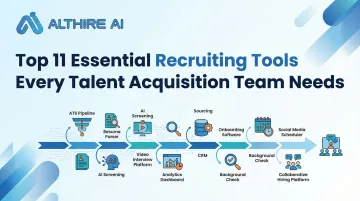
The right recruiting tools directly shape candidate quality, time-to-hire, and the overall hiring experience. Organizations that successfully integrate their TA technology stack achieve a 23% higher retention rate and secure twice as many high-quality hires. What follows breaks down the 11 essential tool categories every TA team needs — and what to look for when evaluating each one.
Key Takeaways
- Recruiting tools span sourcing, screening, interviewing, scheduling, analytics, and onboarding—each solving a distinct hiring funnel problem
- The 11 essential categories cover every stage: ATS, CRM, sourcing, assessments, AI interviews, scheduling, recruitment marketing, background checks, offer management, onboarding, and analytics
- Not every team needs every tool immediately—the right stack depends on team size, hiring volume, and current bottlenecks
- AI-powered tools are rapidly becoming table stakes for teams that want to reduce time-to-hire without sacrificing quality
- Integration between tools matters as much as the tools themselves: fragmented stacks cause data loss and slow down decisions
What Are Recruiting Tools and Why Does Every TA Team Need Them?
Recruiting tools are the software and platforms that support each stage of the talent acquisition lifecycle—from attracting candidates to onboarding new hires. Unlike general HR software, recruiting tools are specifically built to optimize speed, quality, and consistency in hiring workflows.
The cost of not having the right stack is substantial. Teams without proper recruiting tools run into predictable problems:
- Longer time-to-fill on open roles
- Higher cost-per-hire from manual, inefficient processes
- Poor candidate experience that damages employer brand
- Recruiter burnout from repetitive, low-value tasks
Nearly one in four organizations report that new HR technology implementations fail to meet adoption expectations, most often because tools are purchased without auditing actual workflow bottlenecks or confirming integration fit.
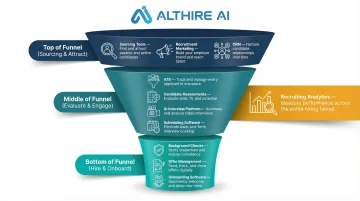
The 11 categories below are organized by where they sit in the recruiting funnel, so you can identify gaps in your current stack and prioritize accordingly.
11 Essential Recruiting Tools Every TA Team Needs
These 11 tool categories are selected based on their impact across the full hiring funnel—from talent attraction to day-one onboarding. Teams using all or most of these categories consistently report faster hiring cycles and higher-quality outcomes.
Applicant Tracking System (ATS)
An ATS is the operational backbone of any recruiting function—it centralizes all candidate applications, job requisitions, and hiring workflows in one place. Every other tool in the stack either feeds into or pulls data from the ATS.
The ATS matters beyond just storing resumes. It enables recruiter collaboration, enforces structured hiring processes, ensures compliance (GDPR, EEO), and provides a single source of truth for all candidate data. Without a functional ATS, recruiting teams lose visibility into pipeline status, struggle with duplicated effort, and risk compliance violations.
| Element | Details |
|---|---|
| Key Features | Job posting and syndication, résumé parsing, interview scheduling, offer management, compliance controls, recruitment analytics |
| Ideal For | All company sizes; especially critical for teams managing 10+ open roles simultaneously |
| Integration Capability | Should connect with CRM, HRIS, onboarding software, and job boards; look for 20+ native integrations |
When evaluating ATS platforms, prioritize those that offer deep API connections rather than superficial integrations. User reviews on platforms like G2 and Capterra reveal that some ATS-to-HRIS integrations only transfer minimal data (such as candidate name), forcing HR teams into extensive manual rekeying that defeats the purpose of automation.
Candidate Relationship Management (CRM)
A recruiting CRM manages relationships with passive and future candidates by nurturing them through personalized, automated campaigns—functioning as a talent pipeline builder that runs continuously in the background.
Unlike an ATS—which manages active applicants who have already applied—a CRM engages candidates who haven't applied yet. That distinction matters most for hard-to-fill roles and for re-engaging "silver medalist" candidates from past hiring cycles. Keeping those relationships warm means a shorter time-to-qualified-slate when new roles open.
The CRM's value is less visible day-to-day but compounds over time: every candidate nurtured today is one less cold outreach tomorrow.
Job Sourcing and Aggregator Tools
Sourcing tools help recruiters proactively find and reach candidates beyond inbound applications—using job aggregators (LinkedIn, Indeed, Glassdoor), Boolean search, and AI-powered talent discovery platforms to surface qualified candidates from across the web.
Passive job boards wait for candidates to come to you. Active sourcing tools flip that dynamic. For competitive or niche roles, that control matters: recruiters can build targeted lists filtered by specific skills, experience levels, and location—rather than hoping the right person finds the posting.
Candidate Assessment and Skills Testing Tools
Assessment tools allow TA teams to evaluate candidates on role-relevant skills before the interview stage—reducing bias in screening, improving quality-of-hire, and filtering applicants based on objective, measurable criteria.
Types of assessments available include:
- Cognitive ability tests that measure problem-solving and reasoning
- Role-specific technical assessments for developers, analysts, and specialists
- Soft skills evaluations for communication and teamwork
- Gamified assessments that engage candidates while measuring competencies
Structured pre-screening reduces time spent on unqualified candidates and supports fairer, more defensible hiring decisions. By evaluating skills objectively before interviews, teams avoid advancing candidates based on resume polish rather than actual capability.
AI Interview Platform
AI interview platforms automate the interview stage by conducting adaptive, structured interviews with candidates 24/7—without requiring a recruiter to be present. They evaluate responses, detect patterns, generate detailed reports, and flag top candidates based on objective criteria rather than gut instinct.
Traditional phone screens and first-round interviews consume a disproportionate share of recruiter time. AI interview tools like AltHire AI eliminate scheduling bottlenecks, reduce interviewer bias, and let candidates interview on their own schedule.
The results are measurable: teams using AI interview platforms report a 60% reduction in screening time and 70% faster time-to-hire. The best platforms include AI proctoring, adaptive follow-up questions, ATS integration, and detailed scoring reports—so recruiters still make the final call.
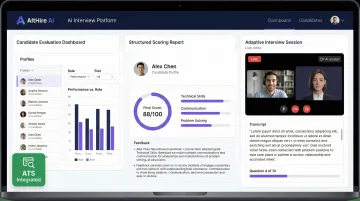
AltHire AI conducts conversational interviews that adapt dynamically to candidate responses—asking relevant follow-up questions rather than following a rigid script. The platform supports screening across technical, functional, and creative roles with role-specific customization for each position.
| Element | Details |
|---|---|
| Key Features | Adaptive AI-driven interviews, 24/7 availability, AI proctoring, structured scoring, ATS integration, multi-role flexibility |
| Ideal For | High-volume hiring, remote-first teams, technical and functional role screening across all industries |
| What to Look For | Bias-free structured scoring, conversational (not rigid) AI, detailed candidate reports, 20+ ATS integrations, and support across technical, functional, and creative roles |
Interview Scheduling Software
Scheduling tools like Calendly and similar platforms eliminate the back-and-forth of coordinating interview times by giving candidates direct access to recruiter or panel availability—reducing scheduling delays from days to minutes.
The hidden ROI of scheduling tools is substantial. User reviews consistently praise robust integrations that centralize workflows and automate interview scheduling, eliminating endless email chains and reducing administrative overhead. Integrations with video conferencing platforms (Google Meet, Zoom) make this tool particularly valuable for remote hiring, where coordinating across time zones can become a major bottleneck.
Recruitment Marketing and Employer Branding Software
Recruitment marketing tools help TA teams attract candidates before they apply—through targeted content across job boards, social media, email, and career pages. They amplify the employer value proposition (EVP) and convert passive interest into active applications.
General marketing platforms weren't built for hiring. Recruitment marketing software includes career site builders, employee testimonial video tools, and multichannel campaign managers that track candidate engagement and feed applicants directly into the ATS. These platforms capture metrics—career page visits, content engagement, application conversion rates—that generic tools simply don't surface.
Background Check and Verification Tools
Background check platforms automate the verification of candidate credentials, employment history, education, and criminal records—replacing manual reference checks with faster, compliant, digital workflows.
In regulated industries like healthcare, finance, and education, background checks aren't optional—they're legally mandated. Integration with the ATS speeds up offer-to-start timelines by triggering background checks automatically post-offer. Deep API connections between ATS platforms and background check providers create massive efficiencies, while poor integrations cause pipeline bottlenecks and compliance risks.
Offer Management Software
Offer management tools simplify the creation, approval, and delivery of job offer letters—using templates, automated approval workflows, and e-signatures to eliminate bottlenecks in the final stage of hiring.
Delays between verbal offer and written offer are one of the top reasons candidates drop off or accept competing offers. Offer management software reduces that window significantly by enabling multi-stakeholder approval without email chains. When legal, HR, and hiring managers can review and approve offers within a centralized system, time-to-acceptance drops dramatically.
Employee Onboarding Software
Onboarding software bridges the gap between signing an offer and being productive on day one—automating new-hire paperwork (W-4s, I-9s, NDAs), training workflows, and portal access so employees feel welcomed before they even start.
Structured onboarding improves 90-day retention and accelerates time-to-productivity by giving new hires clear expectations, necessary resources, and early engagement with company culture. Onboarding software that connects to the ATS ensures no data needs to be re-entered, reducing errors and HR admin time.
Recruiting Analytics and Reporting Dashboards
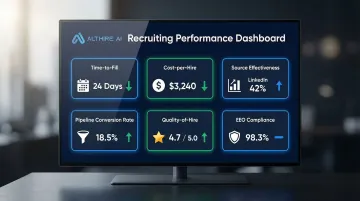
Analytics dashboards aggregate data from across the recruiting stack to give TA leaders a unified view of performance—tracking KPIs like time-to-fill, cost-per-hire, source effectiveness, pipeline conversion rates, and quality-of-hire in real time.
Analytics matter beyond just reporting. Predictive analytics can surface where the hiring funnel is leaking, which sourcing channels deliver the best ROI, and which roles are at risk of going unfilled. Without this visibility, TA teams optimize blindly, investing resources in channels or processes that don't deliver results.
| Element | Details |
|---|---|
| Key Features | Customizable dashboards, pipeline conversion tracking, cost-per-hire and time-to-fill reporting, EEO compliance reports, predictive analytics, benchmarking |
| Ideal For | TA leaders and CHROs needing to report hiring ROI to executive stakeholders; teams scaling hiring across multiple departments or locations |
| What to Look For | Real-time data, integration with ATS and CRM, drill-down by role/department/recruiter, and ability to export reports for leadership review |
How to Choose the Right Recruiting Tools for Your Team
The most common mistake teams make is buying tools based on features or brand name without first auditing where their actual hiring bottlenecks are. Before evaluating any tool category, run a simple funnel audit: identify at which stage candidates drop off or where recruiters spend the most time. That diagnostic tells you whether your priority should be sourcing, screening, scheduling, or analytics.
Key evaluation criteria that tie directly to business outcomes:
- Connects to your existing stack — Superficial integrations that only transfer basic fields push recruiters back to manual rekeying, defeating the purpose of automation. Look for native connectors or open APIs.
- Handles hiring spikes without breaking — If you're planning to double headcount next year, confirm the platform can scale before you're mid-ramp and stuck with a bottleneck.
- Built-in compliance controls — GDPR, EEO, and industry-specific requirements aren't optional in regulated sectors. Verify these are supported natively, not bolted on as afterthoughts.
- Realistic implementation timelines and support — Over 80% of HR and IT leaders struggle with adoption challenges due to poor planning phases. Ask vendors for deployment timelines and what post-launch support looks like before signing.
The strongest recruiting stacks aren't the most feature-rich — they're the most connected. Prioritize platforms that share data automatically, so recruiters work from one consistent record rather than reconciling information across disconnected tools. Point solutions that create data silos tend to cost more time than they save.
Conclusion
The 11 tool categories covered—from ATS and CRM to AI interview platforms and analytics—each address a distinct constraint in the recruiting process. Choosing the right combination depends on team size, hiring volume, and where the current stack is underperforming.
Start with your highest-pain area rather than overhauling everything at once. If screening volume is the bottleneck, an AI interview platform like AltHire AI can cut screening time by 60% while improving evaluation consistency.
The platform conducts adaptive, human-like interviews 24/7 and integrates with 20+ ATS platforms. After each session, it generates detailed candidate reports with objective scores and structured insights — so your team spends less time synthesizing notes and more time making decisions.
See it in action: Explore AltHire AI or book a free consultation to find out how AI-powered interviews fit into your current workflow.
Frequently Asked Questions
What are the tools used in talent acquisition?
Talent acquisition teams typically use a combination of several tool categories: Applicant Tracking Systems (ATS), Candidate Relationship Management (CRM) platforms, sourcing tools, assessment platforms, AI interview software, scheduling tools, offer management systems, onboarding software, and analytics dashboards. Most TA teams deploy between seven and twelve tools simultaneously to cover the full hiring lifecycle.
What is an ATS vs CRM?
An ATS manages active applicants who have already applied, handling resume parsing, interview scheduling, and offer management. A CRM manages relationships with passive candidates before they apply, nurturing them through automated outreach. They cover different stages of the talent funnel and work best when integrated.
What are some ATS tools?
Widely used ATS platforms include Greenhouse, Lever, Ashby, Workable, BambooHR, iCIMS, Jobvite, SmartRecruiters, Recruitee, and BreezyHR. The right choice depends on company size, integration needs, and hiring volume.
What are the 5 C's of recruitment?
The 5 C's are Competency, Character, Culture-fit, Compensation, and Commitment — covering skills, integrity, environment fit, salary alignment, and genuine interest in the role. Modern recruiting tools help assess each dimension more objectively through structured interviews, skills assessments, and behavioral analysis.
How do AI-powered recruiting tools help reduce hiring bias?
AI tools reduce bias by replacing subjective evaluations with consistent, criteria-based scoring. Structured questions, skills assessments, and anonymized screening evaluate candidates on merit — eliminating the halo effect, recency bias, and affinity bias that commonly skew human judgment.
How many recruiting tools does the average TA team use?
Most TA teams use between seven and twelve tools to manage the full hiring lifecycle. The real challenge is integration: fragmented stacks cause duplicated effort, data gaps, and slower decisions. Teams that consolidate around tools with native ATS integrations typically see the fastest gains in recruiter productivity.