Introduction
Hiring teams are drowning in volume. Applications per role have surged 182% since 2021, and the process hasn't kept pace:
- Recruiters now manage 2.7x more applicants than three years ago
- 38% of recruiter time—5 to 8 hours per week—goes to scheduling interviews alone
- The median time-to-fill sits at 45 days, meaning strong candidates routinely go elsewhere
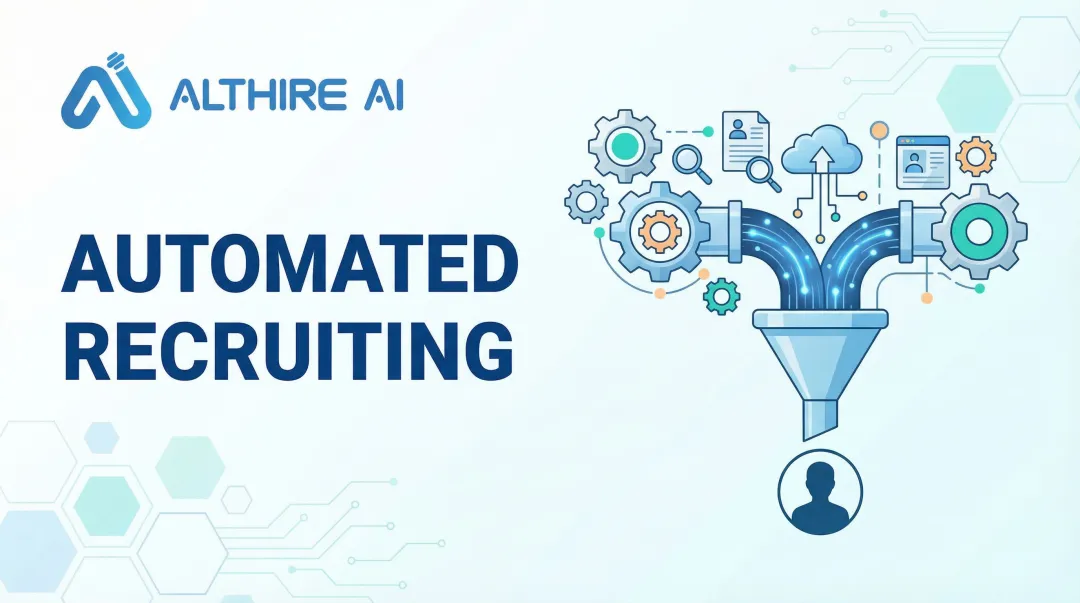
AI is now operational across the hiring funnel. From writing bias-checked job descriptions to conducting full screening interviews, it handles the repetitive, high-volume work that eats recruiter bandwidth. This article covers where AI is being applied, what results companies are reporting, and how to implement it without losing the human judgment that makes great hires.
Key Takeaways
- AI automates the full hiring funnel—job descriptions, sourcing, screening, interviews, scheduling, and candidate communication
- Most companies see 50% faster time-to-hire and 20–40% lower cost-per-hire after adopting AI at scale
- Bias risks are real—but controllable with the right tools, clean training data, and human oversight at every decision point
- Start with your highest-friction stage (screening and scheduling are common first wins) rather than automating everything at once
What AI in Recruitment Actually Means in 2025
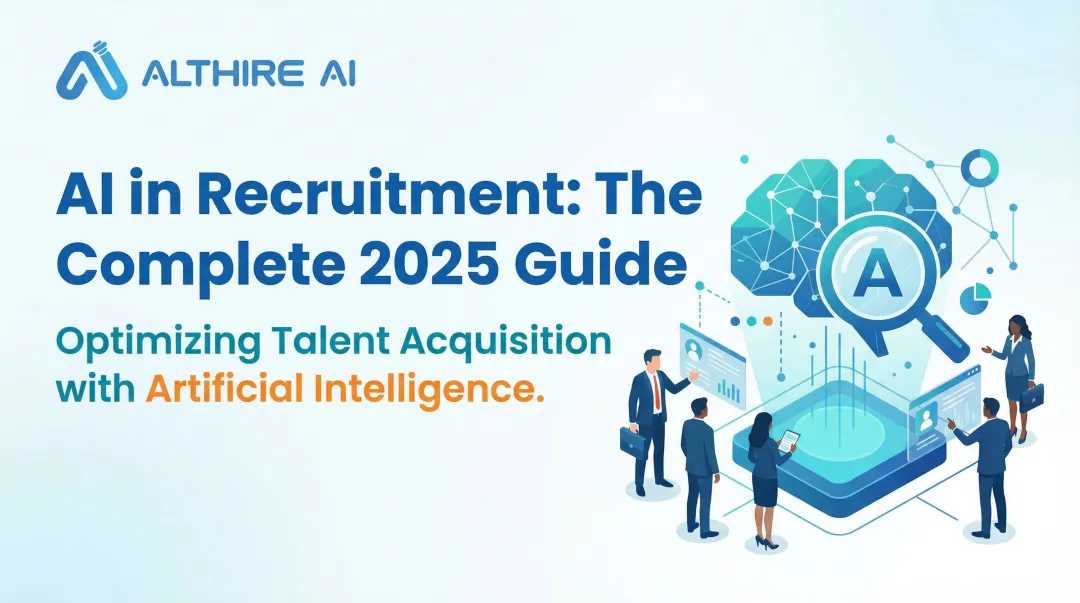
AI in recruitment shifts the workload away from manual, repetitive tasks — freeing recruiters to focus on decisions that require human judgment, like culture fit and offer negotiation. 73% of talent acquisition professionals agree that AI will fundamentally change how organizations hire, and adoption reflects this belief: 69% of HR professionals now use AI in recruiting, up from 51% the year before.
The spectrum of AI adoption varies widely. Some companies use AI for a single stage—resume parsing or interview scheduling—while others have built end-to-end automated pipelines. Understanding where a company sits on that spectrum shapes which tools actually make sense to adopt.
Core Technologies Powering AI Recruitment
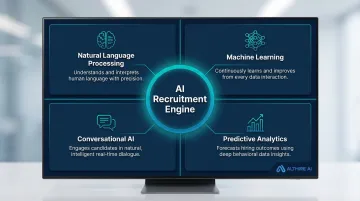
Most AI hiring tools are built on some combination of these four technologies:
- Natural Language Processing (NLP) extracts meaning from resumes and candidate responses — going beyond keyword matching to understand context
- Machine learning identifies patterns in skills, experience, and career trajectories to rank and match candidates
- Conversational AI runs chatbot interactions and virtual screening interviews, adjusting questions based on what candidates say
- Predictive analytics uses workforce data to forecast retention risk and anticipate future hiring needs
The Stages of Hiring That AI Is Automating Right Now
Job Description and Outreach Creation
Generative AI helps recruiters write tailored, inclusive job descriptions in minutes rather than hours. The technology flags exclusionary language—terms that might discourage women, older workers, or underrepresented groups from applying—before postings go live. AI also generates personalized outreach messages for passive candidates, adapting tone and content based on the recipient's background and likely interests.
Candidate Sourcing and Matching
AI tools scan LinkedIn, job boards, and internal databases to identify candidates matching role criteria. Machine learning goes beyond keyword matching — analyzing skills patterns, career progression, and adjacent competencies to identify candidates recruiters might overlook. AI also builds talent pipelines for future roles, reducing reliance on inbound applications.
Resume Screening and Shortlisting
44% of recruiters identify sourcing and screening as the most time-consuming part of their role, spending 13 hours per week per open position on manual review. AI screening algorithms process hundreds of applications in minutes, surfacing the most relevant candidates based on structured criteria. The average recruiter spends just 1 minute 34 seconds reviewing each resume—barely enough to assess qualifications fairly. AI eliminates this bottleneck by applying consistent evaluation across every applicant.
AI-Powered Interviews
Conversational AI now conducts full screening interviews, asking adaptive follow-up questions based on candidate responses. Unlike static question lists, the AI adjusts its line of questioning in real time, probing deeper into relevant skills and experience.
AltHire AI's interview agents operate 24/7 with built-in AI proctoring that verifies identity, detects impersonation through camera verification and audio analysis, and flags AI-generated answers. Every assessment stays authentic without adding recruiter workload.
Key proctoring capabilities include:
- Identity verification via camera and audio analysis
- Real-time impersonation detection
- AI-generated answer flagging
- 24/7 availability across time zones
Interview Scheduling Automation
AI eliminates the back-and-forth of scheduling by letting candidates self-select from available time slots, sending automated reminders, and syncing with calendars. This single automation saves 4 to 7 hours per recruiter per week, freeing up time for candidate evaluation and relationship-building.
Candidate Communication and Experience
AI chatbots guide candidates through applications, answer common questions instantly, and keep applicants engaged throughout the process. 60% of job seekers abandon applications if they're too long or complex. Conversational AI reduces drop-off by making the process feel interactive rather than transactional—one company increased application completion from 12% to 87% using an AI chatbot for text-based screening.
How Leading Companies Are Using AI to Hire Smarter—With Real Results
AI-driven hiring has moved beyond pilot programs. Major companies across industries report measurable ROI, proving that automation works in real hiring environments.
Bon Secours Mercy Health: Healthcare Hiring at Scale
This large health system handles roughly 20,000 external hires annually in a fiercely competitive talent market. Using an AI-powered career site, chatbots, and CRM automation, Bon Secours Mercy Health achieved:
- 28% increase in total external hires year-over-year
- 31% increase in nursing hires, a critical and hard-to-fill role category
The AI handled candidate engagement and initial screening, allowing recruiters to focus on relationship-building with qualified candidates. That same model—automation doing the heavy lifting up front—also shaped how Mastercard approached global hiring.
Mastercard: Scaling Global Talent Engagement
Mastercard deployed automated interview scheduling and AI-powered talent community management to handle massive candidate volume. Results included:
- Over 5,000 interviews scheduled, with 88% completed within 24 hours of the request
- 900% growth in talent community, expanding from under 100,000 to over 1 million candidate profiles
- 11% higher apply conversion rates compared to industry average
Mastercard scaled candidate engagement dramatically without adding proportional recruiter headcount—a direct result of automating the repetitive middle layer of the hiring funnel.
Electrolux: Manufacturing Efficiency Through AI Matching
This multinational manufacturer used AI for candidate matching, one-way video interviews, and automated scheduling, achieving:
- 84% increase in application conversion rate
- 51% decrease in incomplete applications
- 78% time savings through AI scheduling
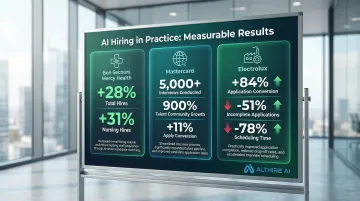
Across all three cases, the pattern is consistent: AI absorbs the high-volume, repetitive work—screening, scheduling, communications—so human recruiters can spend time where it counts. That's not just a workflow tweak; it's a structural shift in how hiring teams operate at scale.
The Real Benefits of AI-Driven Hiring (and the Challenges You Can't Ignore)
Benefits
Speed and Cost Reduction
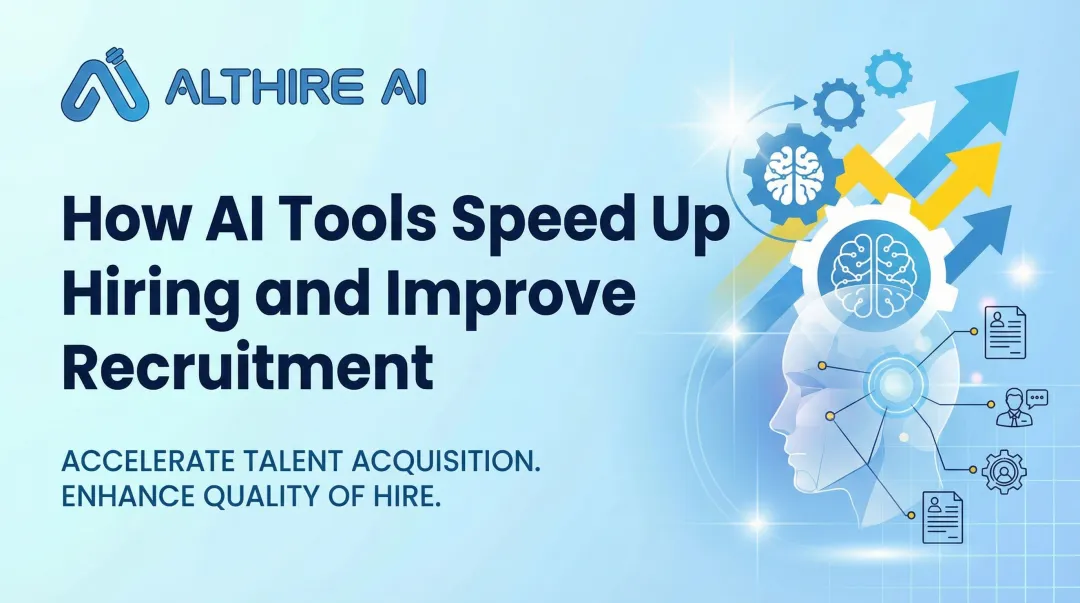
AI compresses time-to-hire by removing manual bottlenecks at every stage. AI can reduce time-to-hire by up to 50% and automate 75% of candidate communications. Teams using AI screening and scheduling report 20 to 40% lower cost-per-hire, driven by reduced recruiter hours and faster placement.
Better Candidate Quality Through Objective Scoring
AI-driven assessments evaluate candidates on demonstrated skills and structured criteria rather than resume formatting or interviewer gut feel. Applying consistent standards across all applicants delivers two concrete gains:
- Surfaces qualified candidates who get overlooked in manual review
- Filters out applicants who don't meet core requirements — without subjective variation
Bias Reduction (With Caveats)
When implemented correctly, AI creates a more standardized evaluation process that reduces unconscious bias. Automated video interview assessments demonstrated minimal subgroup differences, consistent with results from structured human interviews.
That said, AI systems trained on biased historical data replicate those patterns at scale — without proper tool selection and human oversight, AI can entrench discrimination faster than manual processes ever could.
Challenges
Learned Bias and Lack of Accountability
AI trained on historically biased hiring data perpetuates those patterns at scale. A University of Washington study found that AI resume-screening tools ranked resumes with white-associated names higher 85% of the time compared to identical resumes with other names.
The problem extends beyond race. Stanford research revealed that ChatGPT generated resumes portraying women as younger and less experienced, while giving older men the highest ratings from identical information. Companies must build in human review checkpoints at screening stages and regularly audit AI outputs for discriminatory patterns.
Privacy and Compliance Risks
AI recruitment tools process sensitive candidate data — and the compliance exposure is real. Under GDPR, automated decisions rejecting applications without human monitoring are generally prohibited unless specific safeguards are met. In the U.S., the EEOC holds employers responsible for algorithmic discrimination even if a vendor built the tool.
Before deployment, vet vendors on:
- Data handling and retention practices
- Compliance posture (GDPR, CCPA, EEOC guidelines)
- Bias audit frequency and transparency
How to Build an AI-Powered Hiring Process Without Losing the Human Touch
Start With Your Highest-Friction Stage
Don't try to automate everything at once. Identify which stage of your hiring process is slowest or most resource-intensive—resume review, interview scheduling, or initial screening—and pilot an AI tool there first. Measure impact on time-to-hire, recruiter hours saved, and candidate quality before expanding to other stages.
Vet Your Tools for Integration and Compliance
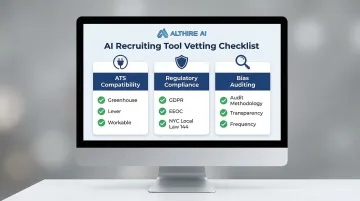
Choose AI recruiting tools that integrate with your existing ATS and have clear data compliance practices. Before committing to any vendor, check for:
- ATS compatibility — integrations with platforms like Greenhouse, Lever, Ashby, Workable, and BambooHR
- Regulatory compliance — documented adherence to GDPR, EEOC guidelines, and NYC Local Law 144
- Bias auditing practices — ask vendors for audit methodology and results, not just promises
AltHire AI, for example, supports 20+ ATS integrations so teams can get up and running quickly without rebuilding their existing stack.
Keep Humans in the Loop at Decision Points
AI should inform hiring decisions, not make them unilaterally. Set clear guidelines for where AI outputs are advisory—screening scores, interview reports—versus where a human must make the final call: offers, culture assessments, and final selection. That boundary is what makes AI adoption both effective and defensible.
Tools that support this model give recruiters detailed analytics, structured interview reports, and video recordings — enough context to make a confident call without outsourcing the judgment. AltHire AI's platform is built around this approach, providing 360° performance breakdowns and complete recordings so recruiters stay in control at every decision point.
Frequently Asked Questions
What tasks in recruiting can AI fully automate versus what still needs a human?
AI can fully automate high-volume, rule-based tasks like resume parsing, interview scheduling, and initial screening interviews. Final hiring decisions, offer negotiations, culture fit assessments, and relationship-building still require human judgment and empathy that AI cannot replicate.
How does AI reduce bias in the hiring process?
AI reduces bias by applying consistent, objective criteria across all candidates rather than relying on subjective impressions. However, this only works when the underlying training data is clean and representative. Poorly trained models replicate historical biases, so human oversight and regular auditing are essential.
Is using AI in recruitment legal and compliant with privacy regulations?
Legality depends on jurisdiction. GDPR requires transparency and impact assessments; the EU AI Act classifies recruitment AI as high-risk with strict obligations; and in the U.S., the EEOC holds employers liable for algorithmic discrimination. Verify that any vendor complies with applicable laws and is transparent about data handling before you sign.
How long does it take to implement an AI recruiting tool?
Implementation time varies widely. Simple tools like scheduling automation can deploy in days, while full AI interview platforms may take a few weeks including ATS integration. AltHire AI, for example, completes most integrations in just a few days.
Can AI recruiting tools work with the ATS we already use?
Yes. Most leading platforms offer native ATS integrations — AltHire AI, for instance, connects with 20+ systems including Greenhouse, Lever, Workable, BambooHR, and iCIMS. Always verify compatibility with your specific ATS before committing to a vendor.
What are the biggest mistakes companies make when adopting AI for hiring?
The top mistakes include trying to automate everything at once without piloting, failing to audit training data for bias, not maintaining human review at key decision points, and choosing tools without vetting data compliance practices. Pilot one use case first, measure results, then scale.